

Penile prosthesis implantation remains the gold standard treatment for severe erectile dysfunction refractory to medical therapy. While the procedure boasts high patient satisfaction rates, traditional surgical steps carry inherent though rare risks of hematoma formation or cylinder herniation. Hematoma is when blood trickles out of the corporotomy (the internal incision through which the penile implant was inserted). This may result in a scrotal swelling that may require another surgery, or may lead to penile prosthesis infection and the need to remove it. Penile implant cylinder herniation is when the inflated implant opens the internal incision (corporotmy) through which it was implanted, and pops out.
In a recent international clinical presentation, Prof. Osama Shaeer (Professor of Andrology) introduced Shaeer’s Corporotomy II, a novel surgical technique designed to optimize the insertion of penile implant cylinders by rethinking the traditional incision approach.
Understanding the Surgical Paradigm Shift
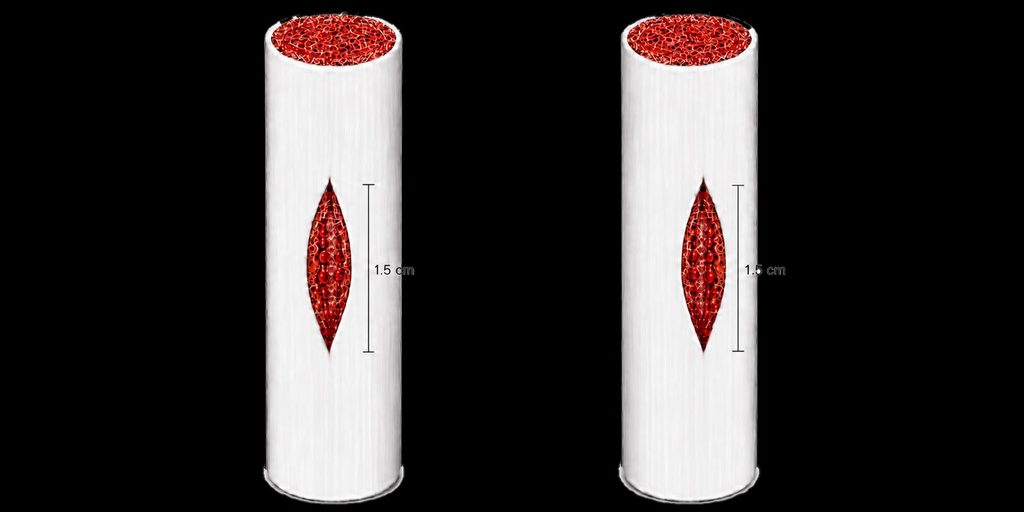
The traditional corporotomy is vertical, a minimum of 1.5 cm long, mostly 2cm. It is closed by surgical knots, with gaps inbetween. Those gaps can be the source of bleeding.
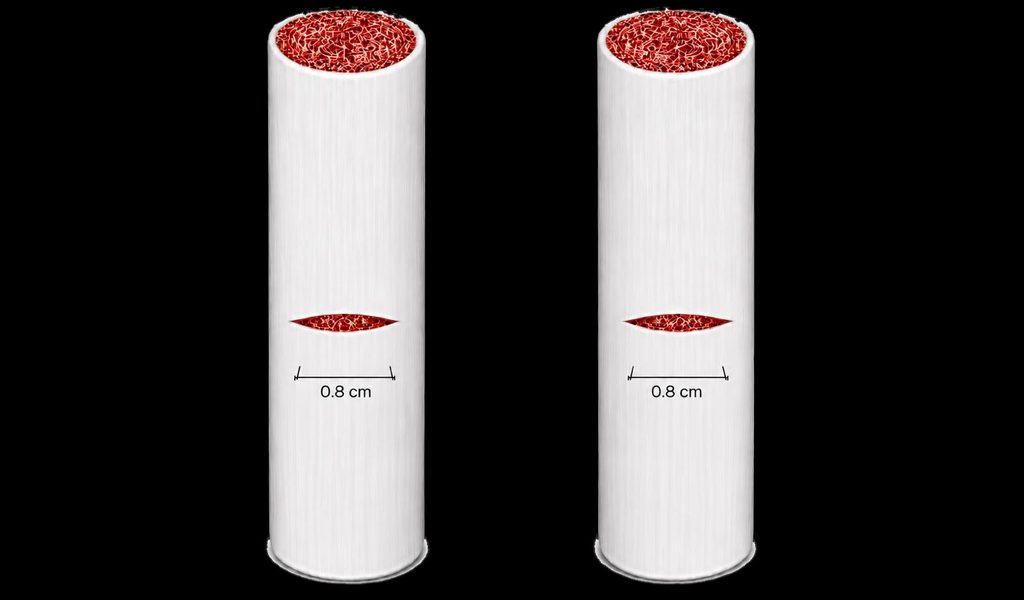
In Shaeer’s Corporotomy Technique II, the corporotomy incision is transverse, less than 1cm, corresponding to the width of the deflated penile implant cylinders. The shorter the corporotomy is, the closer the knots are to each other, and the narrower are the gaps inbetween, rendering the possibility of a hematome much less. Also, it is virtually impossible for the inflatable penile implant cylinders to herniate through a tiny corporotomy incision.
To appreciate the impact of this technique, it helps to compare the standard surgical approach with Prof. Shaeer’s modified method.
| Feature | Traditional Longitudinal Corporotomy | Shaeer’s Corporotomy II (Transverse) |
|---|---|---|
| Incision Orientation | Parallel to the length of the corpus cavernosum | Transverse (perpendicular to shaft axis) |
| Incision Size | Minimum 1.5 cm | Less than 1.0 cm (typically ~0.8 cm) |
| Suture Closure | Requires 2–4 interrupted stitches; potential micro-gaps | Simplified closure parallel to the inflated cylinder |
| Cylinder Herniation Risk | Present along the suture line | Completely eliminated by transverse orientation |
| Post-Op State | Device kept semi-inflated for 24 hours as tamponade | Device completely deflated upon leaving the operating room |
Key Clinical Benefits
- Reduced Risk of Hematoma and Induration: Conventional longitudinal incisions closed with interrupted sutures can leave minute gaps between stitches. These gaps allow minor fluid leakage, leading to post-operative hematomas or tissue induration around the pump. The smaller, transverse closure mitigates fluid seepage significantly.
- Immediate Post-Operative Comfort: Surgeons using traditional methods typically leave the implant semi-inflated for the first 24 hours to exert pressure (tamponade) and prevent bleeding. With Shaeer’s technique, the secure closure allows the device to be fully deflated immediately after surgery, reducing acute post-operative pain for the patient.
- Prevention of Cylinder Herniation: Because the transverse incision is perpendicular to the force vector of the expanding cylinders, the risk of a cylinder herniating through the incision line is virtually zero.
- Shorter Operative Duration: Suturing parallel to the cylinder body rather than across it simplifies the closure process, saving valuable time in the operating room.
Key Technical Considerations for Surgeons
Prof. Shaeer highlighted crucial safety guidelines for surgical teams adopting this technique:
- Controlled Dilation: Given the compact size of the incision (<1), dilating the cavernosal tissue requires precise, gentle handling to prevent corporal extension injuries.
- Anatomical Safety: Placing the transverse incision low on the ventrolateral aspect of the corporal body protects the dorsal neurovascular bundle naturally.
- Procedural Flexibility: If unusual anatomical resistance is encountered, the surgeon can easily convert the transverse incision into a conventional longitudinal one without compromising tissue integrity.
Reference
Published by Prof.Osama Shaeer at the Video Journal of Sexual Medicince